
Most manufacturing platforms will tell you they “support Google Analytics.” What that usually means is they drop a tracking snippet on your homepage and call it a day. You get pageviews. You get sessions. You get bounce rates.
And none of that tells you a single useful thing about your business.
Here’s the real question: when someone requests a quote on your platform, do you know where they came from? When a customer uploads a technical file, do you know which ad campaign brought them there? When an order is placed, can you actually connect that revenue back to the keyword that started the journey?
If the answer is “not really”, you’re flying blind, and your ad budget is paying for it.
The Gap Between Web Traffic and Business Reality
There’s a fundamental mismatch in how most platforms track data. Standard analytics tools were built around the idea that a “conversion” is someone filling out a contact form or clicking a button. That works fine for a SaaS landing page.
Manufacturing and custom parts procurement is a different beast. The journey looks more like this: someone finds your platform through a Google ad, pokes around, uploads a DXF file, gets an instant quote, saves it, comes back three days later from a direct search, and places an order. That’s five meaningful events across multiple sessions — and most setups only credit the last click.
The result? You end up underfunding the channels that actually start the conversation and over-investing in the ones that just happen to be there at the finish line.
What Actually Matters to Track
Quote requests are your highest-intent action short of an order. Someone who requests a quote has moved past browsing — they have a real project, a real timeline, and they’re evaluating whether you can deliver. Knowing which campaigns, keywords, and ad creatives are generating quote requests (not just clicks) changes how you allocate budget entirely.
File uploads are a strong mid-funnel signal. Uploading a CAD file or technical drawing takes effort. It’s not a casual action. When you start tracking this event, you often discover traffic sources that look mediocre on click-through rate but drive a disproportionate share of serious, project-ready visitors.
Orders placed are the obvious one, but the details matter more than just the count. Order value, material type, lead time — when these parameters flow into your analytics alongside the acquisition source, you stop optimizing for volume and start optimizing for the customers who are actually worth having.
How SeekMake Handles This
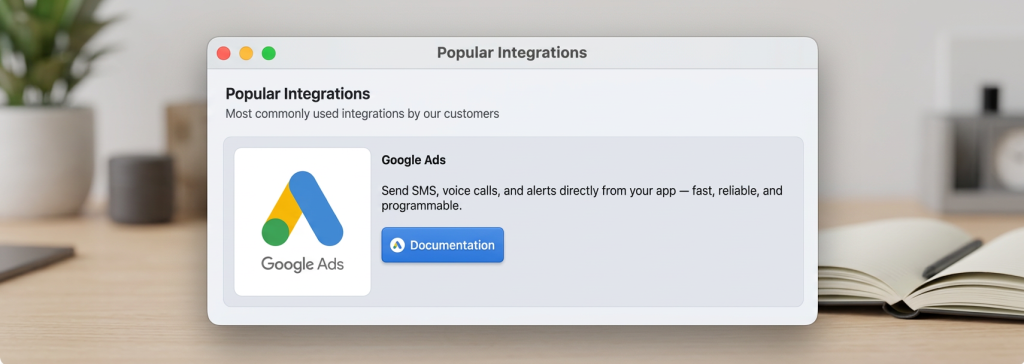
SeekMake now integrates directly with both Google Analytics 4 and Google Ads, and the focus is specifically on these three event types — not generic pageview data.
When a quote is requested, an event fires. When a file gets uploaded, an event fires. When an order is completed, an event fires with the relevant order data attached. All of this flows into your GA4 property as structured events that you can build reports around, create audiences from, and feed back into Google Ads for smarter bidding.
On the Google Ads side, the integration means your campaigns can optimize toward actual business outcomes instead of proxy metrics. Rather than telling Google “optimize for people who spend more than two minutes on the site,” you can tell it “optimize for people who request quotes” — and then let Google’s machine learning find more of those people based on real behavioral signals.
This isn’t a novel concept. GA4 ecommerce tracking relies on discrete events that give visibility into every step of the funnel, from initial interaction to completed transaction — but most platforms use fewer than a third of the available events, meaning budget decisions run on incomplete data. The gap between “analytics installed” and “analytics useful” is almost always an event tracking problem.
A Practical Example
Say you’re running two campaigns: a branded search campaign and a generic “custom sheet metal fabrication” campaign. The generic campaign has higher CPCs and lower click-through rates, so on the surface it looks like the weaker performer.
But when you look at quote request events segmented by source, you find the generic campaign is generating 40% of your quotes at a reasonable cost per quote — because it’s reaching people earlier in their search process, people who haven’t yet decided where to get their parts made. The branded campaign, meanwhile, is mostly capturing people who were already going to find you anyway.
Without event-level data connected to acquisition source, you’d never see this. You’d cut the generic budget, watch quote volume drop, and not understand why.
The Bigger Picture
Analytics integrations don’t generate revenue on their own. The value is in the decisions they make possible. When you know that a specific campaign keyword is generating quote requests from customers who order consistently, you have a real reason to increase that bid. When you see that a whole ad group is driving traffic but zero file uploads, you have a reason to pause it.
That feedback loop — from business event to data to decision — is what separates manufacturing companies that treat digital marketing as a cost center from the ones that treat it as a growth lever.
The data has always been there. The question is whether you’re capturing it in a way that’s actually useful.
SeekMake’s Google Analytics & Google Ads integration is available now. Connect your accounts through the integrations panel in your dashboard.