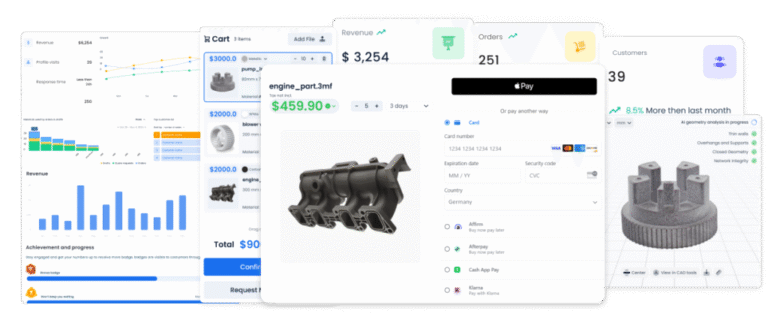
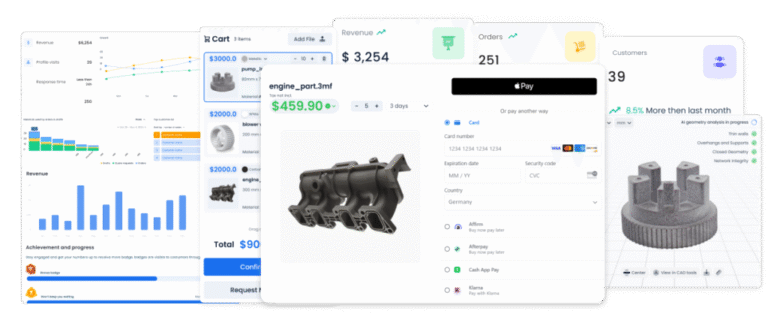
In today’s fast-paced manufacturing landscape, especially within the 3D printing sector, businesses often find themselves juggling a multitude of software tools to manage their operations. This fragmented approach, while seemingly necessary, can lead to inefficiencies, increased costs, and a lack of clear visibility across the entire workflow. The typical tool stack includes separate platforms for e-commerce, customer relationship management (CRM), invoicing, quoting, and order tracking. This creates data silos, requiring manual data entry and increasing the risk of errors.
Imagine the time wasted manually transferring customer data from your e-commerce platform to your CRM, then re-entering it into your invoicing software. This process is not only tedious but also prone to inaccuracies, potentially leading to billing errors and customer dissatisfaction. Furthermore, tracking order progress across multiple systems can be a logistical nightmare, making it difficult to provide accurate updates to your customers.
This reliance on disparate systems hinders collaboration between teams, limits real-time insights, and ultimately impacts your bottom line. It’s time to consider a more streamlined and integrated approach.