Software for ERP integration in energy-efficient manufacturing
SeekMake facilitates efficiency, complementing software for ERP integration in energy-efficient manufacturing operations.
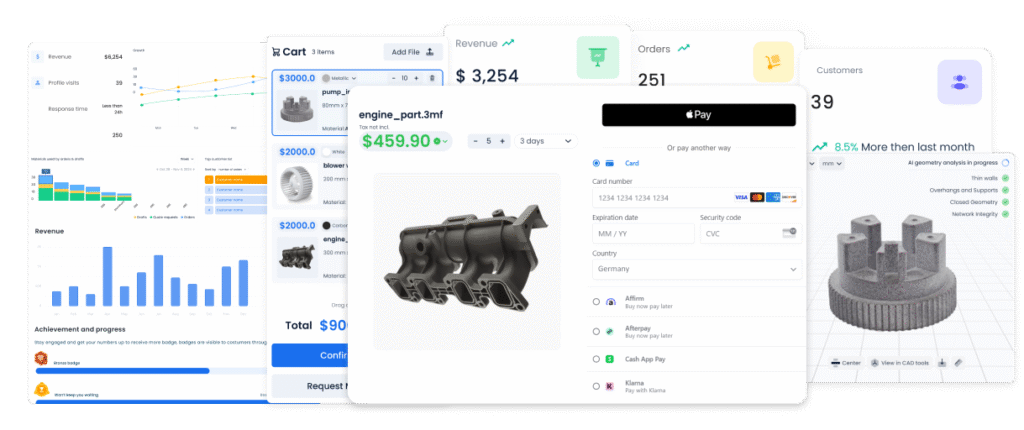
Energy-efficient planning depends on knowing demand early. SeekMake captures priced, paid orders on your website and offers an API, so your ERP can schedule machine time with better information.
Software for ERP integration in energy-efficient manufacturing
Instant Quote
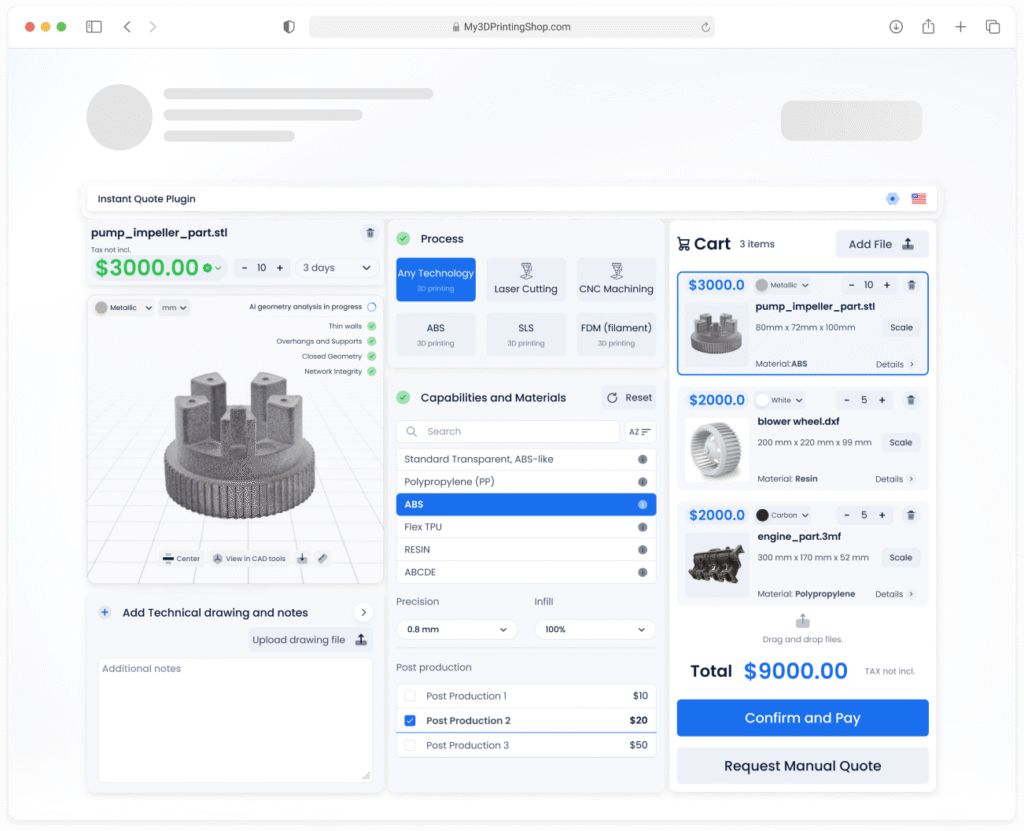
Customers upload a file and see a price based on your machine time, so every incoming request already carries an hours estimate your ERP can use for capacity planning.
Online Payment
Orders paid online through your Stripe or PayPal account are confirmed demand. Scheduling against confirmed orders helps you avoid running machines for jobs that fall through. Your planners can then schedule machines with greater confidence.
Model Preview
The viewer lets buyers check the size of their part, so fewer orders are corrected after the schedule is already set. Stable orders make it far easier to run machines in efficient blocks.
Model Fixing
File checks remove geometry faults before jobs reach planning, which prevents failed runs that waste both power and machine hours. Fewer failed jobs means less energy spent and a calmer production plan.
File Manager
Multi-part orders show the whole workload at once with each part's settings, helping your ERP group work into efficient batches. Grouping similar parts onto the same machine run saves warm-up time.
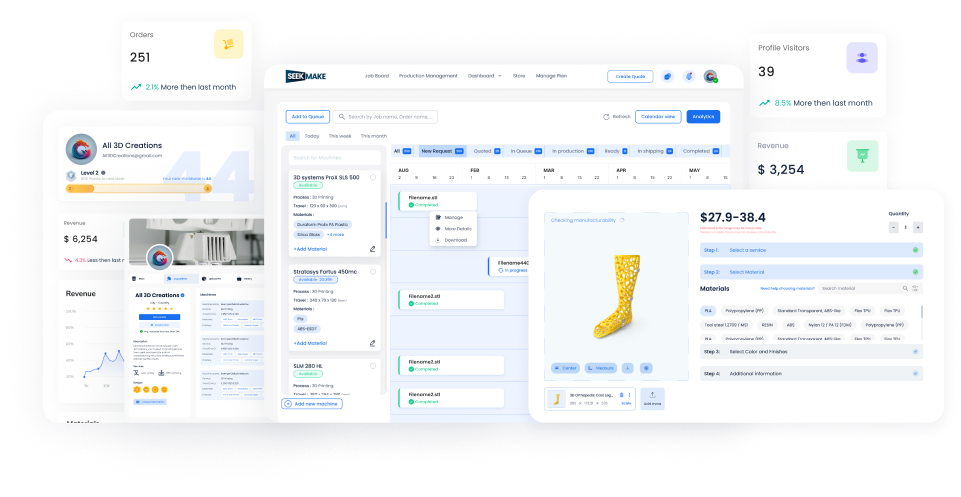
A clear view of incoming work before it reaches planning
Customers Manager
Customer histories show who reorders regularly, which makes demand easier to forecast in your ERP.
Discounts Manager
Offer discounts for flexible delivery dates to give yourself room to fill machines efficiently. That flexibility lets your ERP plan efficient, full machine runs.
Orders Manager
Order statuses keep your planners informed about what is accepted and what is already running.
Shipping Settings
Shipping rules tied to each order help you plan dispatch alongside production. Dispatch then follows production without extra phone calls or emails.
Machines Manager
Each machine is listed with its processes, which supports accurate quoting of running time. Your ERP can then plan with each machine's real running time in mind.
Materials Manager
Materials with prices by weight or hour reflect how much machine time each one consumes.
Custom Pricing
Pricing is built from machine time, setup and quantity breaks, giving your ERP a believable cost per job.
Print Queue
Group the queue by machine and material to cut changeovers and idle warm-up periods. Fewer idle warm-up periods means lower energy use per finished part.
Custom Automatic Emails
Automated emails mean updates reach customers without taking planners away from scheduling. Planners keep their attention on the schedule rather than on writing updates.
Start free and connect planning tools later
Instant quotes and orders cost nothing to begin. Paid plans add automation, customisation and priority support, and the API is available when your ERP is ready for orders.