B2B buyer expectations have shifted: engineers and procurement managers now demand the same instant, seamless experience they get from Amazon.
The rise of Amazon has fundamentally changed how consumers—and, by extension, business buyers—perceive the purchasing process. We call this the ‘Amazon Effect.’ Gone are the days when B2B buyers were willing to tolerate lengthy quote requests, opaque pricing, and uncertain delivery timelines. Today, engineers and procurement managers expect the same level of convenience, transparency, and speed they experience when ordering products on Amazon. They want instant access to information, clear pricing, and the ability to track their orders in real-time. This shift in expectation is particularly pronounced in the manufacturing sector, where traditionally, custom parts and low-volume production runs have been mired in manual processes and slow communication.
This isn’t just about convenience; it’s about efficiency and cost-effectiveness. Buyers are under increasing pressure to streamline their operations, reduce lead times, and optimize their budgets. A clunky, outdated ordering process directly impacts these goals, making manufacturers who fail to adapt increasingly unattractive to potential customers.
One of the most significant expectations stemming from the Amazon Effect is the demand for instant pricing. No longer are buyers willing to wait days, or even weeks, for a quote on a custom part. They need to quickly evaluate their options, compare prices, and make informed decisions. Manufacturers who rely on manual quoting processes are simply too slow to compete in today’s fast-paced environment. Imagine a design engineer who needs a prototype part quickly. They can either submit a request for quote (RFQ) to a traditional machine shop and wait several days for a response, or they can upload their design to a platform that provides instant pricing and ordering. Which option do you think they’ll choose?
Instant pricing empowers buyers to iterate on their designs, explore different materials and manufacturing processes, and optimize their costs in real-time. It eliminates the guesswork and delays associated with traditional quoting, enabling faster decision-making and shorter product development cycles. For manufacturers, offering instant pricing is not just a nice-to-have; it’s a competitive necessity.


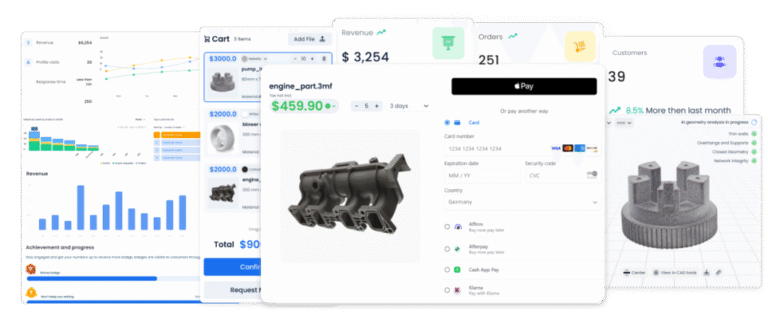
Beyond instant pricing, today’s manufacturing customers expect a seamless online checkout experience. They want to be able to place orders quickly and easily, without having to navigate complex paperwork or engage in lengthy phone calls. A user-friendly online portal that allows buyers to upload their designs, configure their parts, select their desired manufacturing processes, and pay securely is essential for meeting these expectations.
Furthermore, buyers demand transparency throughout the entire order fulfillment process. They want to know the status of their order at every stage, from design confirmation to shipping and delivery. Real-time order tracking, similar to what Amazon provides, is no longer a luxury; it’s a standard expectation. Providing this level of visibility builds trust, reduces anxiety, and fosters stronger customer relationships. It also allows buyers to proactively manage their supply chains and plan their operations accordingly.
Manufacturers who fail to adapt to these changing expectations risk losing business to competitors who offer a more modern, Amazon-like experience. In today’s competitive landscape, customer experience is a key differentiator. Buyers are increasingly willing to pay a premium for convenience, speed, and transparency. By clinging to outdated processes and neglecting the needs of modern buyers, manufacturers are essentially leaving money on the table.
Moreover, a poor customer experience can damage a manufacturer’s reputation and lead to negative reviews and word-of-mouth. In the age of social media and online forums, a single negative experience can quickly go viral, potentially impacting a manufacturer’s ability to attract new customers. Conversely, a positive customer experience can generate loyalty, referrals, and repeat business, ultimately driving long-term growth and profitability.
Fortunately, even small and medium-sized manufacturing shops can now offer an Amazon-like ordering experience without breaking the bank. Platforms like SeekMake provide the tools and technology needed to automate the quoting process, streamline online ordering, and provide real-time order tracking. SeekMake empowers manufacturers to offer instant pricing, accept online payments, and communicate with customers seamlessly through a user-friendly online portal.
By leveraging SeekMake, small shops can level the playing field and compete effectively with larger, more established manufacturers. They can attract new customers, increase sales, and improve their overall profitability. SeekMake is not just a software platform; it’s a strategic investment in the future of manufacturing, enabling shops to thrive in the age of the Amazon Effect. It allows manufacturing businesses to focus on what they do best: making things.
Key Takeaways