Revolutionize your manufacturing response time and win more business with AI-powered quoting.
In the traditional manufacturing landscape, the quoting process is often a significant bottleneck. It typically begins with receiving a Request for Quote (RFQ) via email. An engineer then has to manually open the CAD file, analyze the design, and estimate material costs, machine time, and labor. This process often involves multiple software programs, spreadsheets, and countless hours of painstaking calculations. The result? A quote that might take days – or even weeks – to generate and send back to the potential customer.
Consider the typical scenario: An RFQ arrives on Monday morning. The engineer, already swamped with existing projects, may not get to it until Tuesday afternoon. Opening the CAD file and initial assessment consumes a few hours. Estimating the material usage and machine time stretches into Wednesday. Finally, after internal reviews and approvals, the quote is sent back to the customer on Thursday. That’s almost a full week of waiting for the customer!
This lengthy delay can be detrimental to securing new business. In today’s fast-paced market, customers often seek multiple quotes and prioritize responsiveness. A slow response can signal inefficiency, lack of interest, or simply being too busy to handle the job, potentially losing the deal to a competitor who responds faster.
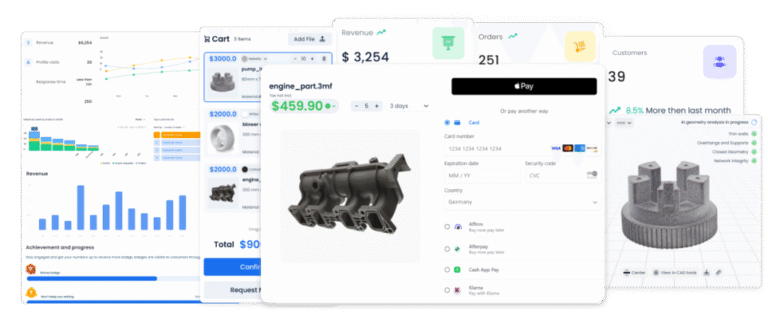
AI-powered quoting platforms, like SeekMake, are transforming the manufacturing landscape by drastically reducing response times. The process is streamlined and automated, eliminating many of the manual steps involved in traditional quoting. Instead of sending an RFQ via email and waiting days for a response, customers can upload their 3D models directly to the platform.
The AI algorithms analyze the design instantly, calculating material costs, machine time, and other relevant factors. Within seconds, the customer receives a comprehensive and accurate price quote. This instant feedback allows them to make informed decisions quickly and efficiently. The customer can then proceed to checkout immediately, initiating the manufacturing process without delay.
SeekMake’s platform analyzes part geometry, volume, surface area, and other critical parameters to generate accurate estimates. Complex algorithms factor in material prices, machine hourly rates, and labor costs to produce a competitive quote. This automated process eliminates human error and ensures consistency across all quotes.


The difference in response time between traditional and AI-powered quoting is dramatic. As highlighted earlier, a traditional quoting process can easily take 3-5 days, or even longer for complex projects. In contrast, an AI-powered platform can generate a quote in mere seconds. This represents a time saving of up to 99%, freeing up valuable engineering resources and enabling manufacturers to respond to customer inquiries with unparalleled speed.
Consider a scenario where a manufacturer receives 20 RFQs per week. Using a traditional quoting process, each quote takes an average of 4 hours of engineering time. That’s 80 hours per week dedicated to quoting alone. With an AI-powered platform, the same 20 quotes can be generated in a matter of minutes, freeing up those 80 hours for other critical tasks, such as design optimization, process improvement, and customer relationship management.
The impact on overall productivity is significant. By automating the quoting process, manufacturers can focus on their core competencies, improve efficiency, and ultimately increase profitability.
In the competitive manufacturing industry, speed is a critical differentiator. Customers are increasingly demanding faster turnaround times, and those who can respond quickly are more likely to win the business. An AI-powered quoting system gives manufacturers a significant competitive edge by enabling them to respond to inquiries faster than their competitors.
When a customer receives multiple quotes, they often prioritize those who respond quickly. A prompt response demonstrates professionalism, efficiency, and a genuine interest in the project. Conversely, a slow response can create a negative impression and lead the customer to look elsewhere. By responding in seconds, manufacturers can capture the customer’s attention and increase their chances of securing the job.
Furthermore, faster response times can lead to increased customer satisfaction and loyalty. Customers appreciate the convenience and efficiency of instant quoting, and they are more likely to return to a manufacturer who provides a seamless and responsive experience. This can result in long-term relationships and repeat business, which are essential for sustainable growth.
SeekMake is a leading provider of AI-powered quoting solutions for the manufacturing industry. Our platform is designed to streamline the quoting process, reduce response times, and help manufacturers win more business. We offer a comprehensive suite of features, including instant price calculations, customizable quoting templates, and seamless integration with existing CRM and ERP systems.
With SeekMake, manufacturers can automate their quoting process, freeing up valuable engineering resources and improving overall efficiency. Our platform is easy to use and requires no specialized training. Simply upload your 3D model, and SeekMake will generate an accurate and competitive price quote in seconds.
We are committed to helping manufacturers stay ahead of the curve and thrive in today’s competitive market. Our AI-powered quoting solutions are designed to empower businesses to respond faster, win more jobs, and achieve sustainable growth. Contact us today to learn more about how SeekMake can transform your quoting process.
Key Takeaways