Discover how AI chatbots can transform your manufacturing business, from instant quotes to 24/7 customer support.
The manufacturing industry is undergoing a digital transformation, and AI-powered chatbots are emerging as a powerful tool for enhancing customer service, streamlining operations, and driving sales. These intelligent virtual assistants can engage with website visitors, answer frequently asked questions, provide instant quotes, and qualify leads, all without the need for human intervention. As customers increasingly expect instant responses and personalized experiences, manufacturers are turning to chatbots to meet these demands and stay competitive.
Implementing an AI chatbot is not just about keeping up with the latest technology; it’s about strategically improving your business’s efficiency and customer satisfaction. Chatbots offer 24/7 availability, ensuring that potential clients receive immediate attention regardless of time zone or business hours. This constant availability can significantly reduce response times and prevent potential customers from seeking services elsewhere. In an industry where speed and precision are paramount, chatbots provide a distinct advantage.
Chatbots can be deployed across various touchpoints in your manufacturing business. One key application is answering material questions. Customers often have specific inquiries about material properties, tolerances, and suitability for different applications. A well-trained chatbot can access a database of material specifications and provide instant, accurate answers, saving your sales team valuable time.
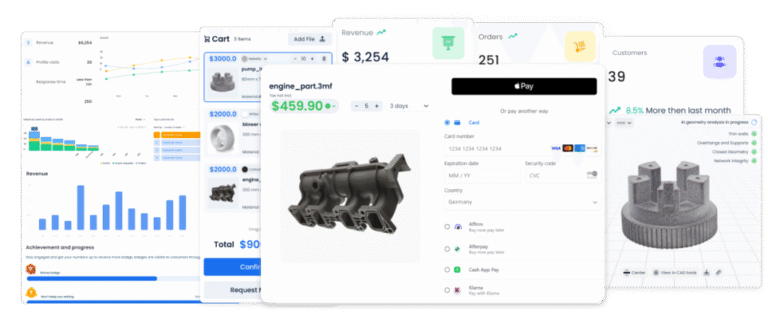
Another powerful use case is providing instant quotes. By integrating a chatbot with a quoting engine like SeekMake, you can enable customers to receive personalized quotes directly through the chat interface. Customers can upload their CAD files or describe their project requirements, and the chatbot will automatically generate a quote based on your pricing parameters. This instant quoting capability can significantly accelerate the sales cycle and increase conversion rates. Chatbots can also qualify leads by asking targeted questions to understand their needs and budget, allowing your sales team to focus on the most promising opportunities.
Beyond these, chatbots excel at providing order status updates, handling basic troubleshooting, and directing customers to relevant resources on your website. This comprehensive support system ensures that customers always have access to the information they need, enhancing their overall experience and fostering stronger relationships.


Before implementing a chatbot, it’s crucial to weigh the potential benefits against the challenges. On the positive side, chatbots offer 24/7 availability, reduced response times, improved lead generation, and cost savings. They can handle a large volume of inquiries simultaneously, freeing up your human staff to focus on more complex tasks. Furthermore, chatbots can collect valuable data on customer interactions, providing insights into their needs and preferences.
However, there are also potential drawbacks to consider. Chatbots may struggle to handle complex or nuanced inquiries that require human judgment. Poorly designed or implemented chatbots can frustrate customers and damage your brand reputation. It’s essential to carefully train your chatbot and ensure that it’s capable of providing accurate and helpful responses. You also need to monitor its performance and make ongoing improvements based on customer feedback. A chatbot is only as good as the data it is trained on, so continuous updates and refinement are essential.
Consider the initial investment as well. While chatbots can save money in the long run, the initial setup and training require resources. It’s important to research different chatbot platforms and choose one that aligns with your specific needs and budget.
SeekMake’s quoting capabilities can be seamlessly integrated with various chat interfaces, including WhatsApp, to provide customers with instant quotes directly through their preferred communication channel. This integration allows you to offer a personalized and convenient quoting experience, increasing customer engagement and driving sales. Imagine a customer sending a CAD file via WhatsApp and receiving a quote within minutes – this level of responsiveness can set you apart from the competition.
By leveraging SeekMake’s API, you can connect your chatbot to our powerful quoting engine. Customers can upload their design files, specify their material preferences, and receive an accurate quote in real-time. The chatbot can also guide customers through the quoting process, answering any questions they may have along the way. This integration not only streamlines the quoting process but also enhances the customer experience, making it easier and more convenient for them to do business with you.
SeekMake provides the backbone for complex pricing calculations, while the chatbot handles the front-end communication. This combination allows for a scalable and efficient solution that can handle a large volume of quote requests without overwhelming your sales team. Furthermore, SeekMake’s reporting tools provide valuable insights into quoting activity, allowing you to optimize your pricing strategies and improve your overall profitability.
Selecting the appropriate chatbot platform is vital for a successful implementation. Several platforms cater to different business needs, ranging from simple rule-based chatbots to sophisticated AI-powered solutions. Consider factors such as ease of use, integration capabilities, customization options, and pricing when making your decision. Look for a platform that offers robust analytics and reporting features, allowing you to track the chatbot’s performance and identify areas for improvement.
Integration capabilities are especially important for manufacturing businesses. Ensure that the chatbot platform can seamlessly integrate with your existing CRM, ERP, and quoting systems. This integration will enable you to share data between systems and automate key processes, such as lead generation and order fulfillment. Also, consider the platform’s ability to handle complex data inputs, like CAD files and technical specifications.
Scalability is another key consideration. As your business grows, you’ll want a chatbot platform that can scale with you. Look for a platform that can handle a large volume of inquiries and support multiple languages and channels. Finally, consider the level of support offered by the chatbot provider. Choose a provider that offers comprehensive documentation, training resources, and responsive customer support.
To maximize the benefits of your chatbot, follow these best practices. First, define clear goals and objectives for your chatbot. What problems are you trying to solve? What metrics will you use to measure success? Having clear goals will help you design and train your chatbot effectively.
Next, focus on providing a seamless and intuitive user experience. The chatbot should be easy to use and understand, even for customers who are not familiar with chatbots. Use clear and concise language, and avoid technical jargon. Provide helpful prompts and guidance to help customers navigate the chat interface. Make sure the chatbot is easily accessible on your website and other communication channels. Consider adding a prominent chat icon and providing clear instructions on how to use the chatbot.
Regularly monitor and analyze the chatbot’s performance. Track key metrics such as response time, customer satisfaction, and lead generation. Use this data to identify areas for improvement and make ongoing adjustments to the chatbot’s training and configuration. Continuously update the chatbot’s knowledge base with new information and answers to frequently asked questions. By following these best practices, you can ensure that your chatbot provides a valuable and positive experience for your customers.
Key Takeaways