Unlocking pricing precision in CNC machining through the power of artificial intelligence.
Estimating the cost of CNC machining is a complex task. Traditional methods often rely on manual review and the experience of human estimators. These estimators must consider numerous factors, including part geometry, material properties, tolerances, surface finish requirements, and production volume. Each of these variables can significantly impact the final price. This manual process is time-consuming, prone to human error, and can lead to inconsistent pricing across different jobs or estimators. Furthermore, accurately accounting for the intricate relationship between these factors requires years of experience, making it difficult to scale quoting operations efficiently. The inherent variability in manual estimation can result in lost profits due to underpricing or lost opportunities due to overpricing, ultimately impacting a business’s bottom line. The need for a more accurate, consistent, and scalable solution is evident in today’s competitive manufacturing landscape.
Machine learning offers a powerful alternative to traditional CNC pricing methods. By training algorithms on vast datasets of historical quote data, we can create predictive models that accurately estimate the cost of new jobs. These models learn the complex relationships between part features and pricing outcomes, enabling them to generate precise and consistent quotes. The process begins with data collection, where historical quote data is gathered, including information on part geometry (e.g., volume, surface area, feature complexity), material type (e.g., aluminum, steel, plastic), tolerances (e.g., standard, fine, tight), quantity, and other relevant parameters. This data is then used to train a machine learning model, which learns to predict the final price based on the input features. The model is iteratively refined using various optimization techniques to minimize prediction errors and improve accuracy. Once trained, the model can be deployed to automatically generate quotes for new CNC jobs, eliminating the need for manual review and reducing the risk of human error.


The success of a machine learning pricing model hinges on the quality and quantity of training data. The model learns by identifying patterns and correlations within the data, so a diverse and representative dataset is crucial. Features like part volume, surface area, number of holes, material type, and tolerance levels are extracted from CAD models and quote specifications. These features, along with the actual quoted price, serve as the input for the machine learning algorithm. The algorithm then iteratively adjusts its internal parameters to minimize the difference between its predicted price and the actual price in the training data. This process, known as training, involves techniques like gradient descent and backpropagation to optimize the model’s performance. Different machine learning algorithms, such as regression models, neural networks, and decision trees, can be used for this purpose, each with its own strengths and weaknesses. The choice of algorithm depends on the specific characteristics of the data and the desired level of accuracy.
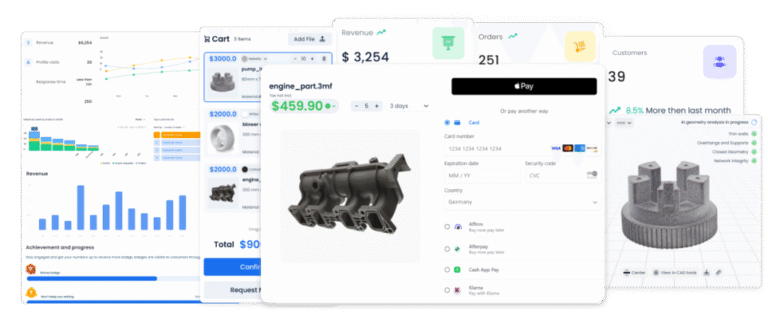
SeekMake’s pricing AI is built upon a foundation of over 10 million real CNC machining quotes. This massive dataset provides the model with a comprehensive understanding of the factors that influence CNC pricing. By training on such a large and diverse dataset, SeekMake’s AI can accurately predict the cost of a wide range of CNC jobs, from simple prototypes to complex production parts. The AI continuously learns and improves as new quote data is added, ensuring that it remains accurate and up-to-date. This continuous learning process allows the model to adapt to changing market conditions and technological advancements, providing users with the most accurate and reliable pricing information available. The sheer scale of the training data is a significant advantage, enabling SeekMake’s AI to outperform traditional estimation methods and deliver unparalleled pricing precision.
The adoption of machine learning in CNC pricing offers numerous benefits. Firstly, it significantly improves pricing accuracy by eliminating human error and biases. Machine learning models can analyze vast amounts of data and identify subtle patterns that human estimators might miss, resulting in more precise and consistent quotes. Secondly, it streamlines the quoting process, reducing turnaround time and freeing up valuable resources. Automated pricing allows businesses to respond quickly to customer inquiries and win more projects. Thirdly, it enhances scalability, enabling businesses to handle a larger volume of quote requests without increasing staffing costs. Finally, machine learning provides valuable insights into pricing trends and cost drivers, allowing businesses to optimize their operations and improve profitability. By leveraging the power of machine learning, CNC shops can gain a competitive edge and thrive in today’s dynamic manufacturing environment.
The future of CNC pricing is undoubtedly intertwined with artificial intelligence. As machine learning algorithms continue to evolve and data availability increases, we can expect even greater accuracy and efficiency in the quoting process. AI-powered pricing tools will become increasingly sophisticated, incorporating real-time market data, supply chain information, and manufacturing process optimization to generate highly customized and competitive quotes. Furthermore, AI will play a crucial role in automating other aspects of CNC machining, such as process planning, toolpath generation, and quality control. This will lead to increased productivity, reduced costs, and improved overall efficiency in the manufacturing industry. By embracing AI, CNC shops can unlock new levels of innovation and competitiveness, paving the way for a more efficient and sustainable future.
Key Takeaways