Optimize your customer relationships and boost sales with targeted CRM strategies designed for 3D printing.
In the rapidly evolving landscape of 3D printing, even small businesses need to adopt sophisticated strategies to stay competitive. A Customer Relationship Management (CRM) system is no longer just for large enterprises; it’s a vital tool for any 3D printing shop looking to streamline operations, improve customer satisfaction, and drive growth. Many small businesses rely on spreadsheets and email, but these quickly become unmanageable as the business grows. A CRM provides a centralized hub for all customer interactions, ensuring no lead is forgotten and every customer receives personalized attention.
Without a CRM, critical data can be scattered across multiple systems, making it difficult to gain a holistic view of your customers. This can lead to missed opportunities, inefficient processes, and ultimately, lost revenue. By implementing a CRM system, small 3D printing businesses can lay a solid foundation for future growth and success.
One of the primary challenges for 3D printing businesses is managing the influx of quote requests. Each request represents a potential project, and failing to respond promptly or accurately can mean losing business to competitors. A CRM system allows you to track every quote request from initial inquiry to final delivery. You can log details such as the customer’s requirements, the materials needed, the complexity of the design, and the estimated price.
With a CRM, you can automate the process of assigning quote requests to the appropriate team member, setting reminders for follow-up, and tracking the status of each quote. This ensures that no request falls through the cracks and that customers receive timely and accurate responses. Furthermore, you can analyze the data collected from quote requests to identify trends, such as the most popular materials or the types of projects that generate the most revenue. This information can be used to refine your pricing strategy and optimize your marketing efforts.


Following up on pending quotes is crucial for converting leads into paying customers. Many potential customers require multiple touchpoints before making a decision, and a CRM system can help you stay on top of these interactions. You can set reminders to follow up with customers at specific intervals, track the details of each conversation, and record any additional information that may influence their decision. A CRM allows you to personalize your follow-up messages based on the customer’s specific needs and preferences.
By consistently following up on pending quotes, you can demonstrate your commitment to customer service and increase your chances of winning the project. A CRM system also provides valuable insights into why certain quotes are not being converted, allowing you to identify areas for improvement in your sales process. Perhaps your pricing is too high, your communication is unclear, or your turnaround time is too long. By addressing these issues, you can improve your conversion rate and boost your bottom line.
Repeat customers are the lifeblood of any successful business, and 3D printing is no exception. Identifying and rewarding these valuable customers is essential for building long-term relationships and fostering loyalty. A CRM system allows you to easily track customer purchase history, identify repeat buyers, and segment them for targeted marketing campaigns. You can create loyalty programs that reward repeat customers with discounts, special offers, or exclusive access to new services.
By showing your appreciation for their business, you can encourage repeat customers to continue choosing your 3D printing services over the competition. A CRM system also provides valuable insights into the needs and preferences of your repeat customers, allowing you to tailor your services to better meet their expectations. This can lead to increased customer satisfaction, positive word-of-mouth referrals, and ultimately, more revenue.
Different industries have different 3D printing needs, and segmenting your customers by industry allows you to tailor your marketing and sales efforts accordingly. A CRM system enables you to categorize customers based on their industry, such as aerospace, automotive, medical, or consumer goods. This allows you to create targeted marketing campaigns that address the specific challenges and opportunities within each industry.
For example, you might highlight the benefits of 3D printing for prototyping in the automotive industry or the advantages of using biocompatible materials for medical implants. By segmenting your customers, you can also identify new market opportunities and develop specialized services to meet the needs of specific industries. This can help you differentiate your business from competitors and attract new customers.
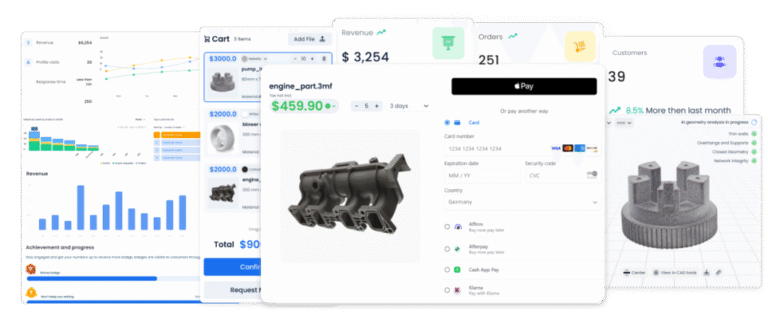
SeekMake understands the unique challenges faced by 3D printing businesses, which is why our platform includes built-in CRM features designed specifically for manufacturers. Our CRM allows you to manage leads, track quotes, follow up with customers, and segment your customer base, all within a single, integrated platform. With SeekMake, you can streamline your sales process, improve customer communication, and gain valuable insights into your business performance.
Our CRM is seamlessly integrated with our 3D printing price calculator, allowing you to generate accurate quotes quickly and easily. You can also track the status of each quote, set reminders for follow-up, and record all customer interactions. SeekMake’s CRM also provides powerful reporting and analytics tools, allowing you to track key metrics such as conversion rates, customer lifetime value, and revenue per customer. By leveraging these insights, you can make data-driven decisions to optimize your business and drive growth. SeekMake provides a competitive advantage by centralizing the sales process for 3D printing shops.
Key Takeaways