A comprehensive guide to streamlining your manufacturing shop's financial operations by accepting online payments.
In today’s fast-paced business environment, offering diverse and convenient payment options is crucial for manufacturing shops. Customers expect seamless transactions, and limiting payment methods can lead to lost sales and a competitive disadvantage. Embracing online payments not only enhances customer satisfaction but also streamlines your internal processes, reduces administrative overhead, and accelerates cash flow.
Consider the modern landscape: many businesses, especially smaller operations and startups, prefer the ease and security of online transactions. By accommodating their preferences, you broaden your potential customer base and foster stronger relationships. Furthermore, online payments provide valuable data insights into customer behavior, enabling you to refine your pricing strategies and optimize your service offerings. Ultimately, integrating online payment solutions is an investment in the long-term growth and success of your manufacturing business.
Stripe is a powerful and flexible payment gateway that caters to businesses of all sizes. Its robust API and extensive documentation make it a favorite among developers, allowing for seamless integration into your existing website or application. For manufacturing shops, this means you can create a custom payment experience that aligns perfectly with your brand and workflow.
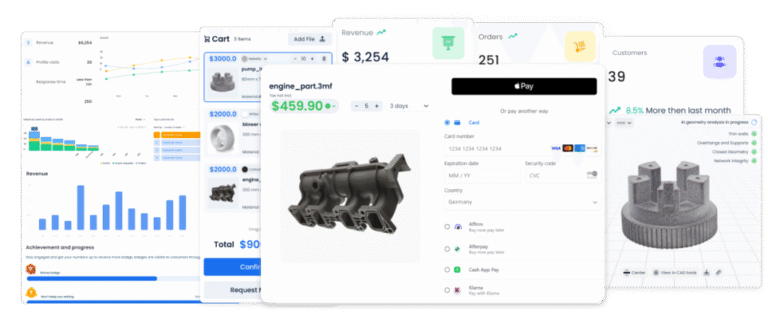
Pros: Stripe offers competitive pricing, supports a wide range of currencies and payment methods, and provides advanced features like subscription management and fraud prevention. Its developer-centric approach allows for deep customization and integration with other business tools. Cons: While Stripe’s API is powerful, it requires some technical expertise to implement. However, SeekMake integrates directly with Stripe, eliminating the need for complex coding or third-party plugins. This allows manufacturers to start accepting payments instantly, without the usual payment gateway setup headaches.


PayPal is a household name in online payments, boasting a massive user base and global recognition. Its ease of use and buyer protection policies make it a popular choice for both businesses and consumers. For manufacturing shops, offering PayPal as a payment option can instill trust and confidence in potential customers, especially those who are unfamiliar with your brand.
Pros: PayPal is easy to set up and use, offers buyer protection, and is widely accepted worldwide. Its brand recognition can boost customer confidence. Cons: PayPal’s fees can be higher than other payment gateways, and its dispute resolution process can be challenging for sellers. Furthermore, some customers may be hesitant to use PayPal for larger transactions due to perceived security concerns.
Bank transfers, including ACH (Automated Clearing House) and wire transfers, are a traditional method of payment that remains relevant for manufacturing shops, particularly for large transactions or recurring payments. While not as instantaneous as online payment gateways, bank transfers offer a secure and reliable way to move funds directly between accounts.
Pros: Bank transfers are generally secure and suitable for large transactions. They often have lower fees compared to credit card payments. Cons: Bank transfers can be slow and cumbersome, requiring manual processing and reconciliation. They also lack the real-time tracking and reporting capabilities of online payment gateways. This can lead to delays in order fulfillment and increased administrative overhead.
Net-30 invoicing is a common practice in the manufacturing industry, allowing customers to pay for goods or services within 30 days of the invoice date. This credit-based system can foster strong relationships with established clients and encourage repeat business. However, it also carries the risk of delayed payments and potential bad debt.
Pros: Net-30 invoicing can improve customer relationships and encourage repeat business. It provides flexibility for customers with cash flow constraints. Cons: Net-30 invoicing can tie up your working capital and increase the risk of late payments or defaults. It also requires careful credit management and collection efforts. Consider using credit checks and implementing clear payment terms to mitigate these risks.
The best payment options for your manufacturing shop will depend on several factors, including your target market, transaction size, and risk tolerance. Consider offering a mix of payment methods to cater to diverse customer preferences. For example, you might offer Stripe or PayPal for smaller orders and bank transfers or Net-30 invoicing for larger, recurring contracts.
It’s also crucial to factor in the cost of each payment method, including transaction fees, chargeback fees, and administrative overhead. Regularly review your payment processing costs and negotiate with your providers to ensure you’re getting the best possible rates. By carefully evaluating your options and implementing a well-rounded payment strategy, you can streamline your financial operations, improve customer satisfaction, and drive business growth.
Key Takeaways